
Code Vein 2 rings hollow
Off-brand Elden Ring without the co-op, plus our review of indie tabletop game HUNT(er/ed)

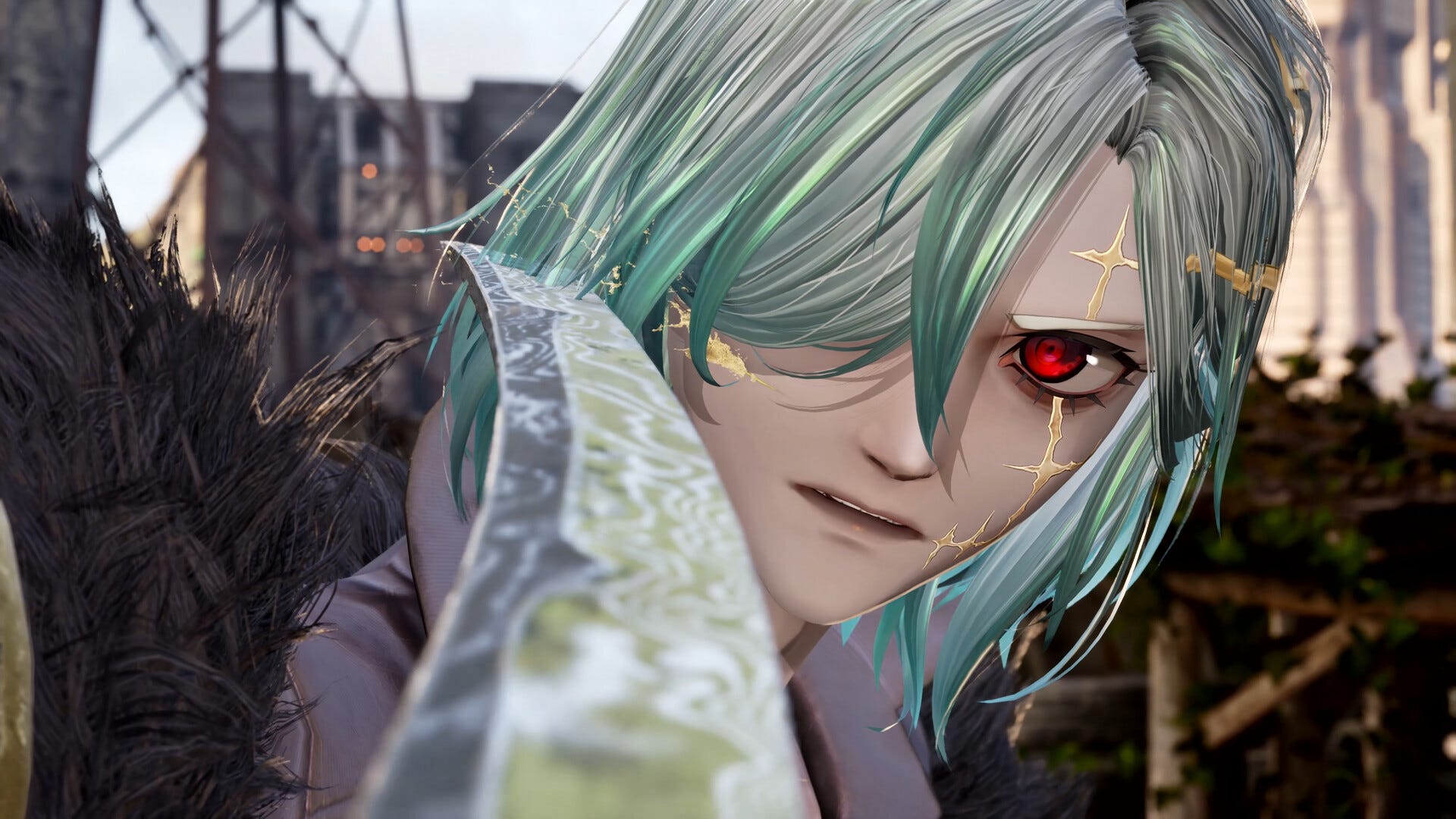
My eyes never stopped rolling at the original Code Vein’s risqué outfits and anime absurdities, but I relished co-oping its campaign with a dear friend.
We’d already toured the FromSoftware canon together after he introduced me to Dark Souls with a gift copy of its Prepare to Die Edition. Code Vein doesn’t rival the greatness of that series, but it had the advantage of coming out in 2019 — an era when decent soulslikes were harder to find, let alone decent soulslikes with co-op.
Debuting nearly seven years later, Code Vein 2 faces stiff competition from a recent slate of high-profile FromSoft imitators, from Black Myth: Wukong to Lies of P. Its anime aesthetic is no longer unique in the genre either, and it can’t even summon much nostalgia for the original game, since it features a new cast and setting.
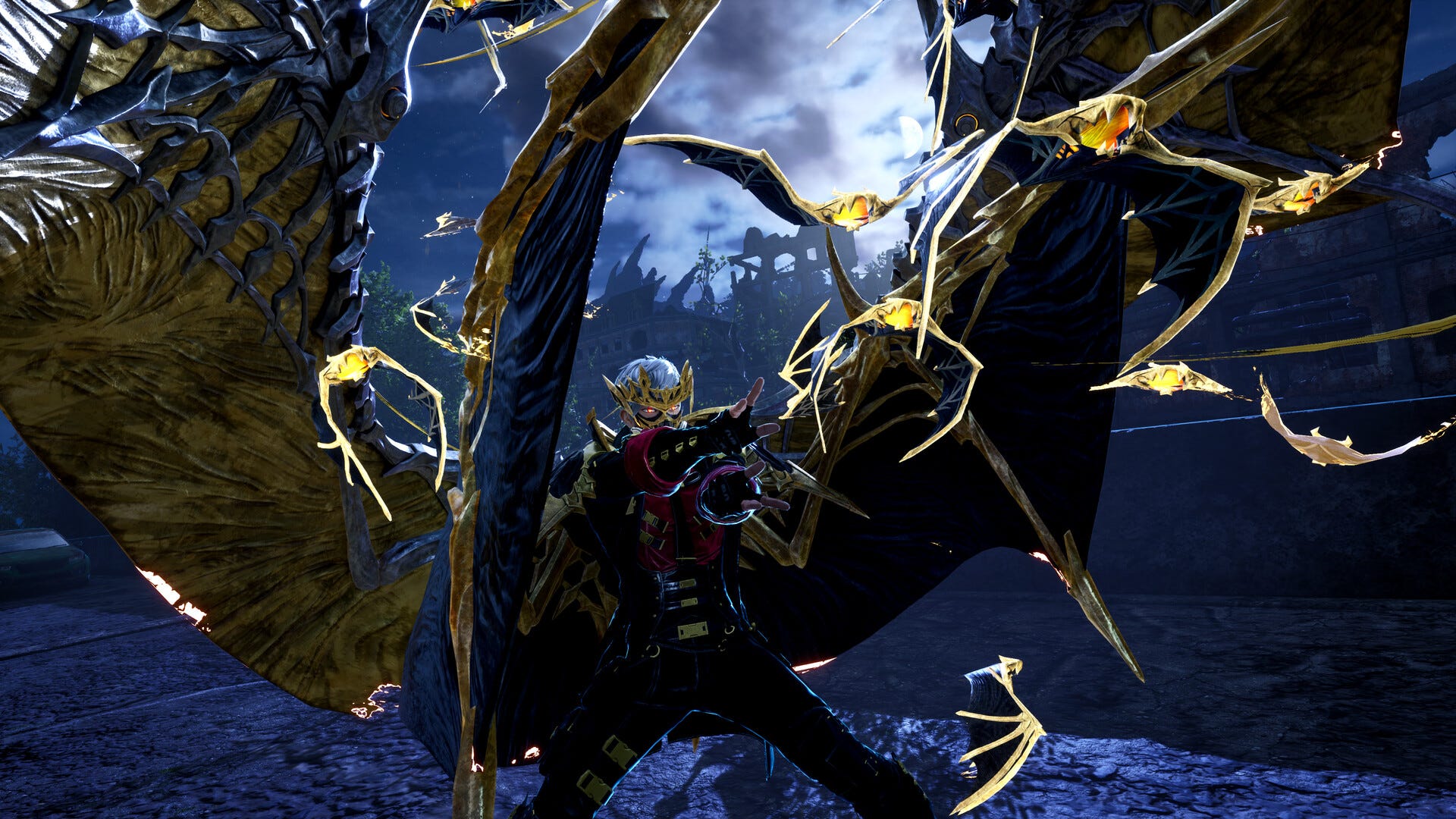
Co-op could have helped Code Vein 2 stand out. Outside of the odd Nioh or Remnant title, few soulslike franchises have prioritized multiplayer as FromSoft has. But Bandai Namco made the baffling decision to abandon co-op, perhaps deigning it too labor-intensive or too hard to integrate into its new, open world design.
I’m left with a Code Vein 2 that’s awkwardly grafted Elden Ring into its DNA, without its multiplayer modes or its breathtaking commitment to player agency. CV2’s character creator stands as the only element to surpass this titan — with its kaleidoscope of eye colors, body shapes, hairstyles, hats, tattoos, scars, piercings, cloaks, corsets, and more.
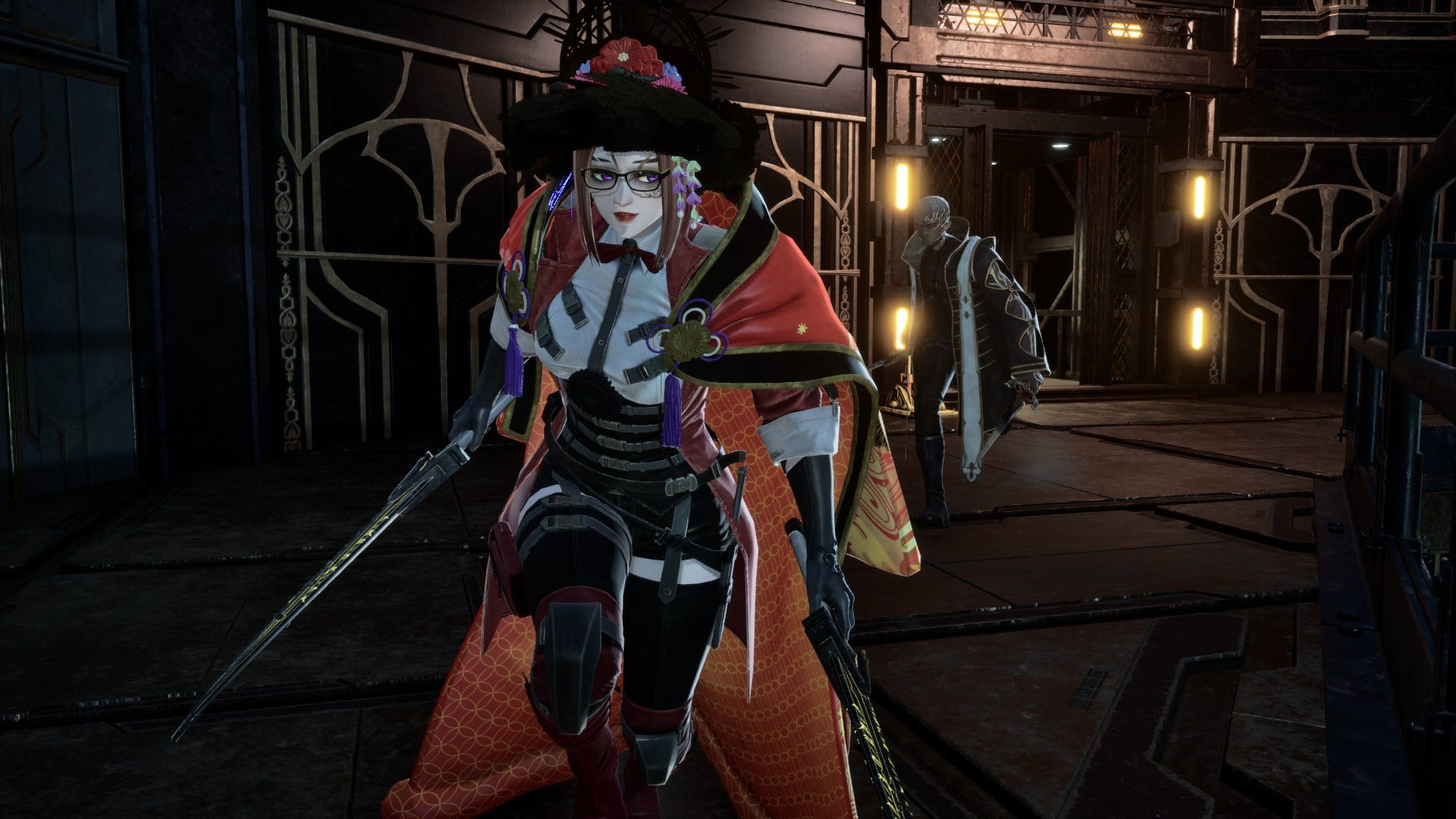
The action gameplay isn’t so expansive. There’s no armor to speak of, and the game’s weapon variety — while broad — pales in comparison to Elden Ring. Its deepest customization system again comes from its Blood Codes. NPCs hand out these stat-twisting archetypes, which you can freely swap between and level up as you play.
I’ve still enjoyed my hours with the game, as I sneaked, slashed, and performed visceral — I mean, drain — attacks upon hapless foes. But without a friend to pull me through, I’m skeptical I’ll come close to finishing it. I’m already turning my attention to No Rest for the Wicked, a fusion of Diablo and Dark Souls that just added co-op (it’s also from the developer of the masterful Ori and the Will of the Wisps, one of my favorite metroidvanias). If Code Vein 2 follows suit, perhaps I’ll jump back in.
Speaking of multiplayer games, we also caught up with HUNT(er/ed), kindly provided by Tabletop Bookshelf, a purveyor of indie TTRPGs. Aside from the booklet, all the game really requires is four d6s and a standard playing card deck. While a single player mode can guide you to self-narrate a duel between a monster and its nemesis, my wife and I played the two-player version, each taking oppositional roles.
Rounds begin with players rolling their two dice until someone gets doubles. That player then moves a token (which can be literally anything) closer to them, indicating that the fight has tilted in their favor. They’ll then draw from the deck until they hit a card with a suit matching their role (spades/clubs for the hunter, hearts/diamonds for the monster). Finally, they’ll read the corresponding prompt from the booklet, answering its question and advancing the story. These queries throw you through the ups and downs of mortal combat — though they also push players to explore mutual backstories and surprising conclusions.
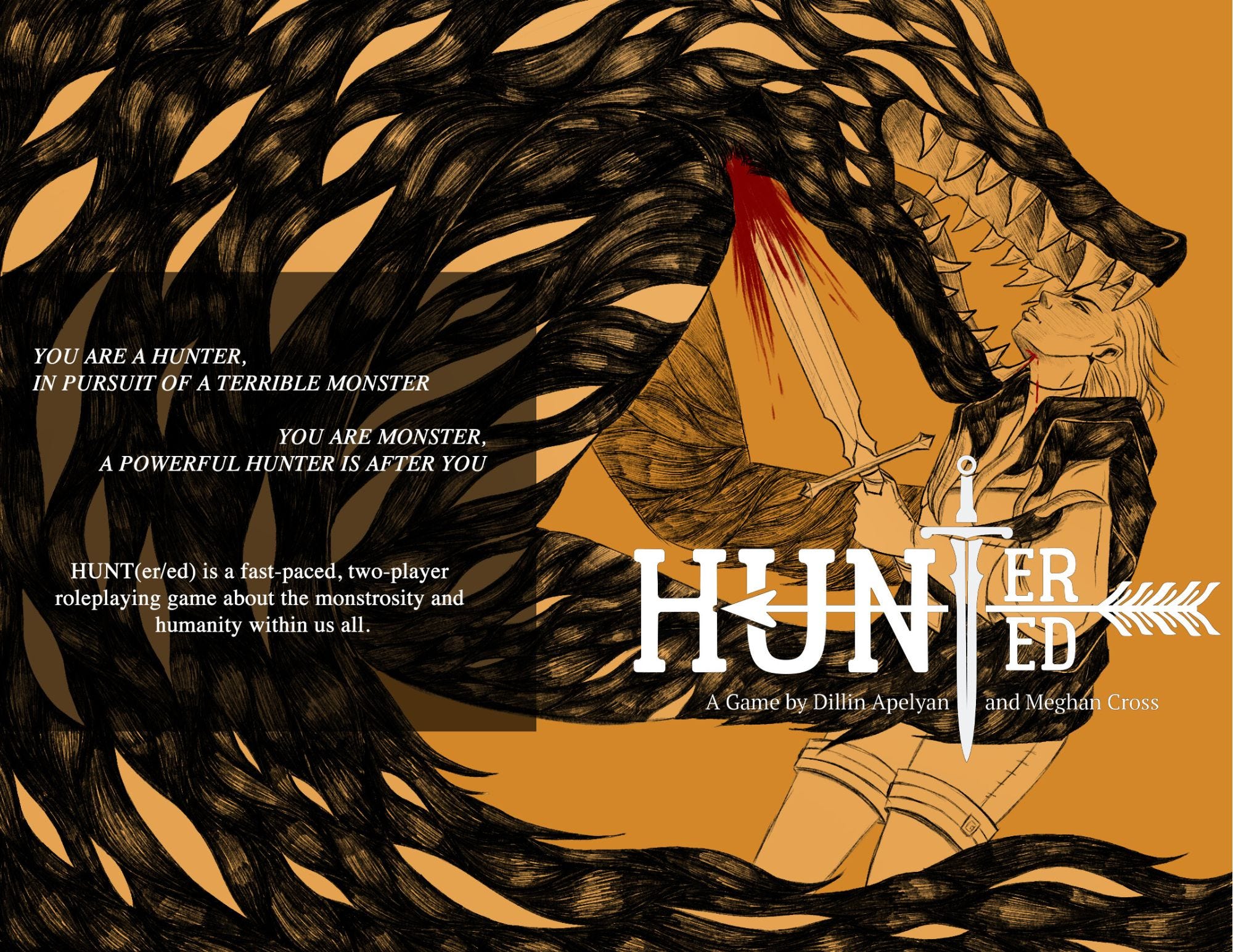
The game supports any duo you can think of. Rather than start with a classic werewolf vs ranger faceoff, however, I took the role of a pet songbird who was plotting to kill the housecat he blamed for the deaths of his outdoor fellows.
After gouging out a feline eye with a sewing needle, my bird character got imprisoned in his cage by Feefee the cat. Having won the bout, my wife narrated the cat’s persistence and the bird’s stunted revenge. Such was just one possible outcome the game steered us to. Another of our sessions ended in farce. Others could end in deep tragedy or even reconciliation.
Like any TTRPG, HUNT(er/ed)’s mileage depends on how willing you are to play along, but its premise will likely wear thin after a few sessions. As an exploration of what it means to hunt and what it means to be hunted, the game invites deep metaphors and imaginative introspection. It may not be the most innovative example of the recent roleplaying renaissance, but it’s an approachable entry-point that can generate a cool story or two in games that last anywhere from a few minutes to a few hours.